

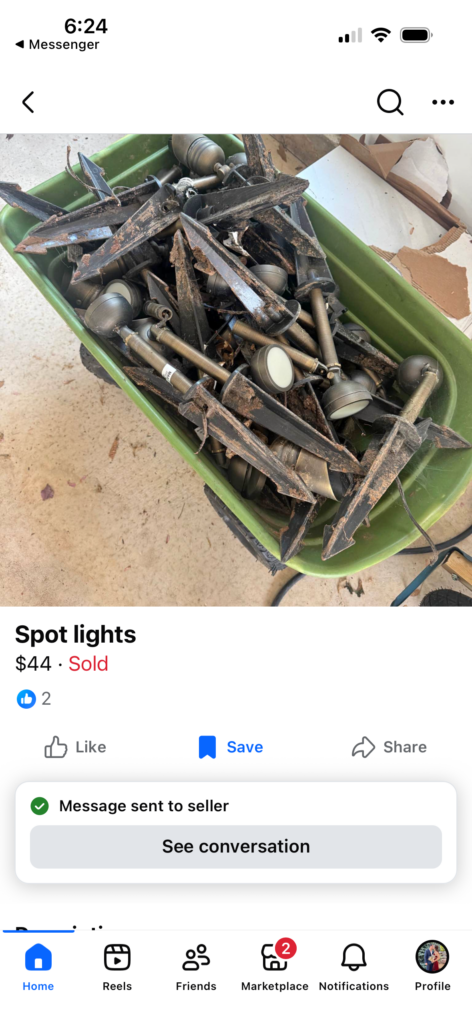
You guys. I just bought 28 outdoor landscape lights for $420 on Facebook Marketplace.
Not 28 cheap lights. Twenty-three VOLT 12V Mini Round Brass Frosted Flood Lights and five VOLT Fat Boy 12V Brass Outdoor Spotlights — the solid brass ones in bronze finish, the kind that retail for around $80 to $100 a pop. The seller even threw in four extra bulbs.
If I’d bought all 28 of them new, I would’ve spent right around $1,764 not including tax. Instead, I spent $420.
That’s the kind of find that keeps me coming back to Facebook Marketplace, and it’s not even an unusual one for me at this point. We’ve been diy’ing our house since before it was built, and a huge chunk of how we’ve been able to do classical, quality finishes on a real-life budget is by sourcing the good stuff secondhand. Over the last five-plus years, Marketplace alone has saved us somewhere between $5,000 and $10,000, and that’s a conservative number.
If you’ve scrolled Marketplace and only ever come up with broken IKEA dressers and mystery-stain couches, this post is for you. Here’s exactly how I hunt.
Why Facebook Marketplace Is a Goldmine (If You Know Where to Look)
People sell quality pieces all the time. They move. They re-decorate. They over-buy for a renovation and end up with a bunch of leftover tile or unused fixtures sitting in their garage. They inherit a house full of furniture and just want it gone before the closing date.
The catch is that a lot of sellers don’t actually know what they have, or they price it way too low for a quick sale, or they bury a great brand-name product in a vague listing with two blurry photos that nobody scrolling will think twice about. That gap between what something’s actually worth and what it’s listed for is exactly where the deals live. You’re not going to find them by scrolling around aimlessly — you find them by knowing exactly what you’re looking for and being the most prepared buyer when something good finally pops up.
Step 1: Research First, Search Second
I never open Marketplace until I know exactly what I want.
When I’m planning out a project, I do all my research first and pick out the highest-quality version of whatever it is I need — the brand, the model number, the exact finish I want for the space. For our landscape lighting, that meant reading a bunch of reviews, comparing brass against cast aluminum, and landing on VOLT as the brand I trusted for both the look and the longevity I was after. Once I know what the best version of the thing actually is, then I go hunt for it secondhand.
This step is honestly the difference between people who score on Marketplace and people who scroll forever and never seem to find anything good. If you don’t know what good looks like, you’re not going to recognize it when it shows up underpriced.
Step 2: Search Three Ways (in This Order)
Once I know what I’m looking for, I run the same three-step search every single time.
First, I search the exact brand and model name. Typing in something specific like “VOLT brass flood light” or “Pottery Barn Turner chair.” If the seller listed the item correctly, this will pull it right up.
If that doesn’t turn anything up, I broaden out and start looking through bigger categories like “outdoor lighting” or “leather chair” or “porcelain tile,” and I scroll through the listings hunting for sellers who don’t realize what they have. Those are the listings with only two pictures, no brand name in the title, and a price that feels wildly off for what the piece actually looks like in the photos. I zoom in on every photo, I check for any markings or stamps, and I cross-reference what I see against the brand I’ve been researching.
If I still haven’t found anything, I save the search and let Marketplace send me a notification whenever a new listing matches it. This part takes patience, and a lot of my best finds came in months after I first set up the alert. The good stuff is worth the wait.
Step 3: How I Vet a Facebook Marketplace Listing Before I Commit
The second I see something promising, I do four things in this order before I commit to anything.
First, I pull up retail on a second tab so I know what the item is actually selling for new right now, not what I think I remember it costing from a few years ago. Second, I look up the brand to make sure it’s actually worth buying — cheap doesn’t always mean it’s a deal, and a no-name fixture for $10 is still a no-name fixture. Third, I zoom into every single photo looking for wear, damage, mismatched parts, or anything that feels off in the way the listing is staged. Fourth, I message the seller with specific questions about the age, the condition, why they’re selling it, and the big one — I ask if they can send me a few more photos and a quick video.
If they won’t send extra photos or a video, I just politely tell them I’m not interested and move on. There’s always another listing coming, and I’d rather wait for a seller who’s willing to be transparent than risk driving an hour out for something that doesn’t match the original pictures.
Step 4: Facebook Marketplace Red Flags I Won’t Ignore
Five years in, I’ve got a short list of things that make me close the tab immediately.
The first one is what I just mentioned — if they won’t send extra photos or video. A seller who’s confident in what they have will almost always send more, and if they’re hesitating or making excuses, that pretty much tells me everything I need to know.
The second is when the pickup location feels off. If the address is vague, or they want to meet at a random parking lot for a $2,000 couch, or they keep changing the location at the last minute, I’m out.
The third one has saved me more than once, and this one is huge — I always click into the seller’s profile and check when they joined Facebook. If their account was created in 2026 and they’re already trying to offload an expensive item, it’s almost always a scam, in my experience.
The fourth is when the address doesn’t match the value of the item. Once we agree on a price and I have a pickup address, I always drop it into Google Maps before I leave the house. If someone’s selling a $10,000 sectional but the pickup is a sketchy-looking apartment, something’s not adding up, and I’d rather trust my gut and walk away than show up to a situation that doesn’t feel right.
Step 5: How I Negotiate
If a listing is already a steal, I pay the asking price. I’m not going to risk losing a great deal over twenty-five dollars.
If I think the price has some room in it, I’ll open with an offer that’s lower than what I actually want to pay and let the seller negotiate me back up. Nine times out of ten I end up landing within a few dollars of my real target, which is exactly where I wanted to be all along. The whole thing only works if you stay respectful about it, though, because sellers respond way better to a polite buyer who’s clearly serious than they do to someone trying to play games or lowball them disrespectfully.
Step 6: Pickup, Done Right
For anything big, I bring the truck and my husband to help load. For anything I’m the slightest bit unsure about, I’ll also bring our dog and keep her in the car as an extra layer of caution. I’ve never actually had a problem, but I’d much rather take the precaution than end up being the cautionary tale.
A few things I always do on pickup day:
- I always inspect the item carefully before I hand over any money, no matter how small the purchase is.
- I bring cash, or I have my phone ready for whatever payment method we agreed on ahead of time. I never wire money before I’ve actually seen the item in person.
- I bring a tape measure. I keep one in the truck console for exactly this reason — there have been a few times where measuring on the spot saved me from buying something that wasn’t going to fit where I needed it to go.
- If something feels off when I get there, I walk away. No deal is worth more than my peace of mind, and the right find will always come along eventually.

A Few of My Best Scores
The 28 lights aren’t even my biggest win. Here are some of the other finds that made me a true believer.
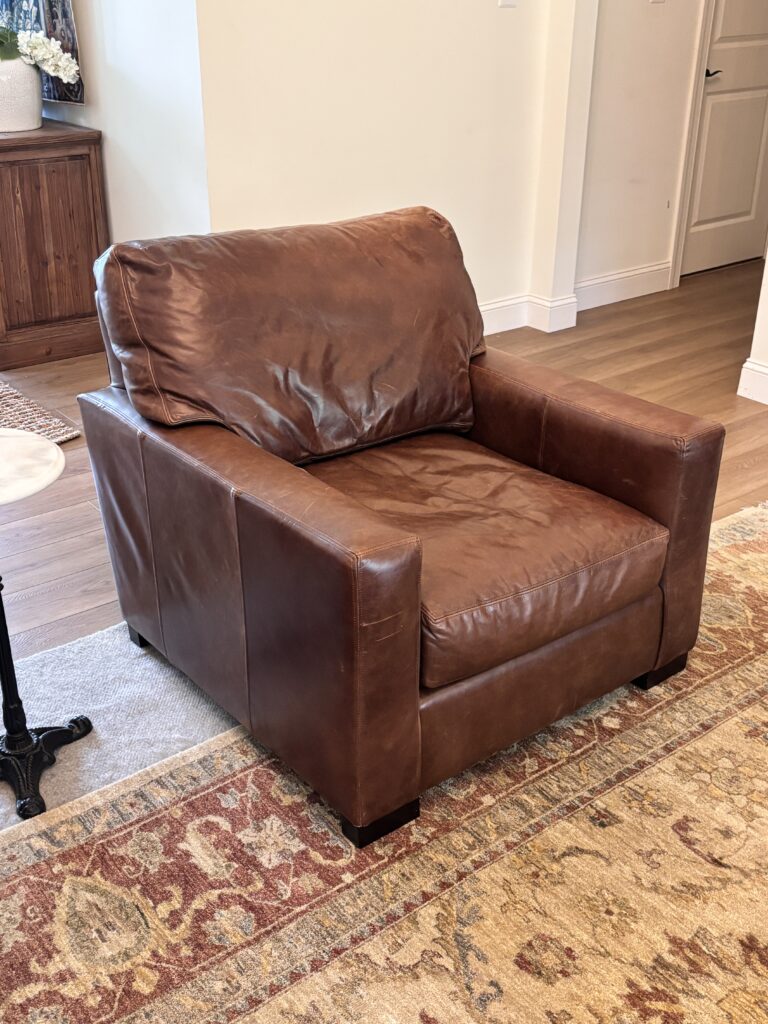
A pair of Pottery Barn Turner Square Arm Leather Chairs for $300. Retail is $2,049 each, so I saved almost $3,800 on a single pickup.
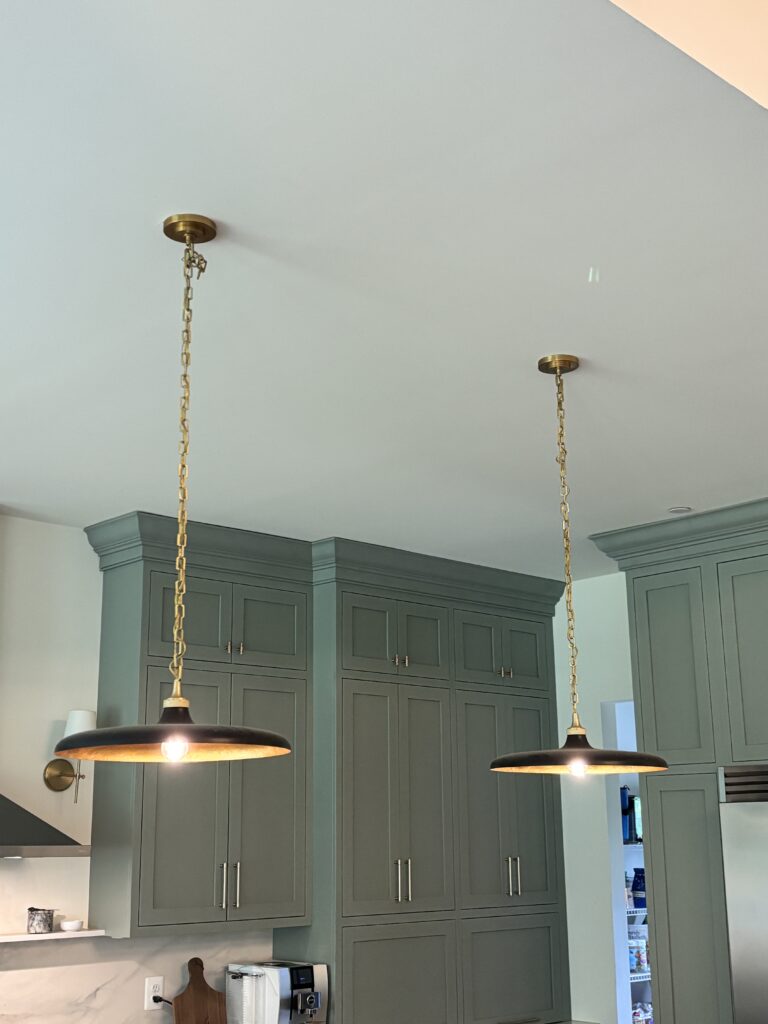
A pair of Visual Comfort Piatto Medium Pendants for $700. They retail for $999 each, and they’re hanging in our house right now.
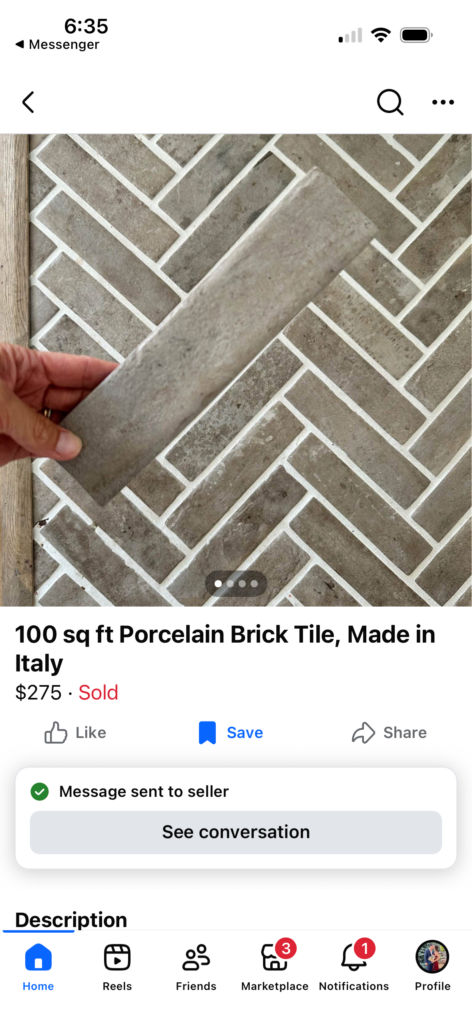
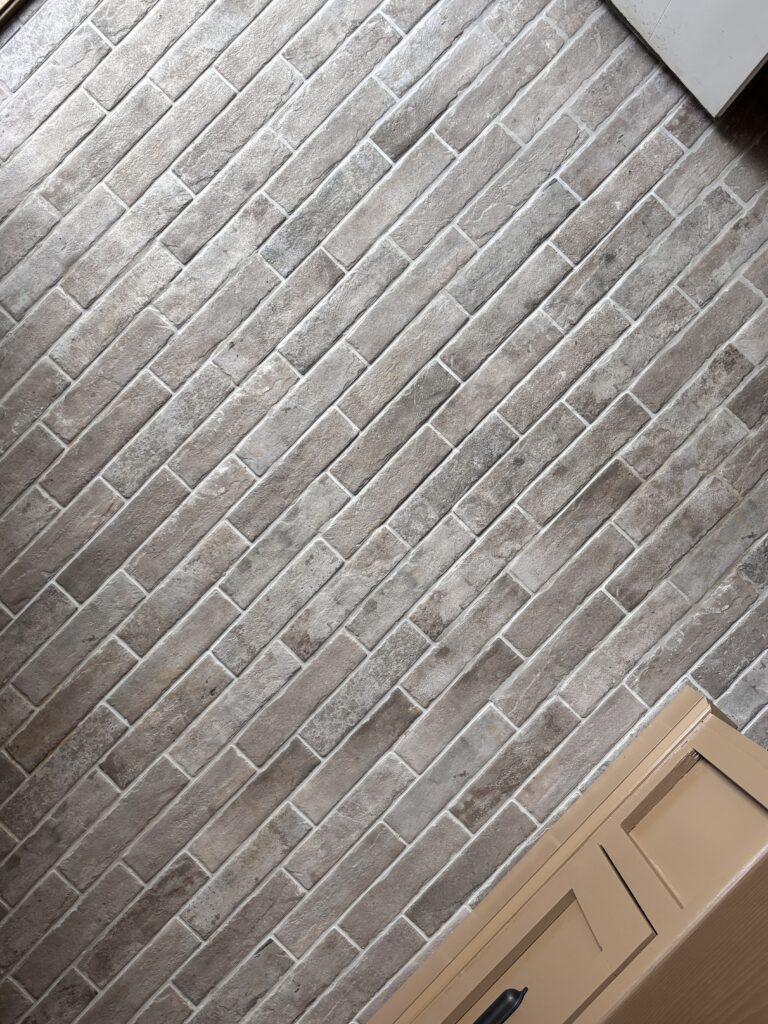
One hundred square feet of Ackland Montello 2 in. x 10 in. Matte Porcelain Brick Look Tile for $250. At $7.35 a square foot retail, that’s a $485 save on a single project.
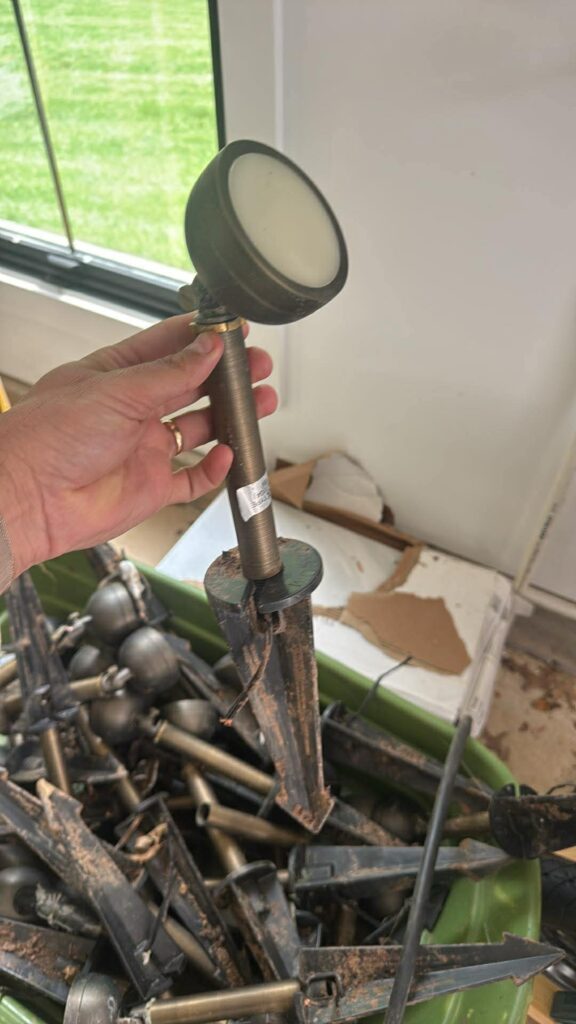
The 28 VOLT brass landscape fixtures for $420 (the haul I started this post with). A few of them are going into the front yard landscape lighting plan, and the rest will roll in as we keep diy’ing our way through the backyard.
If I’d paid retail for just these four finds, I’d be out close to $7,000 more than I am right now, and that’s basically a whole other room of our house we got to renovate instead.
The Bottom Line
Five years into hunting on Marketplace, this is what I keep coming back to. Know exactly what you want before you start searching, vet every seller like you’re a skeptic, negotiate respectfully when there’s room and pay asking when there isn’t, and walk away from anything that feels off without overthinking it. The biggest thing is doing your homework up front, so that when the right listing finally pops up, you’re the buyer who’s already ready to move on it.
money buying from Facebook Marketplace!
Got a Marketplace win story, or a question about how I’d hunt for something specific? Drop it in the comments — I love this stuff. And if you’re working on landscape lighting, the full plan for our front yard is going up on the blog soon, so keep an eye out!
Frequently Asked Questions
Is Facebook Marketplace safe to buy from?
For the most part, yes — but only if you do your homework before you go. I always check the seller’s profile (when they joined, how long they’ve been on Facebook), I never wire money before I see the item, I always pick up in person, and I trust my gut if anything feels off. The red flags section above covers exactly what to watch for.
How do I avoid scams on Facebook Marketplace?
Two things have saved me more than once. First, I check when the seller joined Facebook — any account created in the current year that’s already trying to offload an expensive item is almost always a scam. Second, I drop the pickup address into Google Maps before I leave the house. If the address doesn’t match the value of what they’re selling, that’s my answer.
What are the best things to buy on Facebook Marketplace?
In my experience, anything where brand quality really matters — solid wood furniture, designer lighting, leather upholstery, real brass fixtures, porcelain tile. Sellers often don’t realize what they have, especially with renovation leftovers and inherited pieces. The trick is knowing exactly which brand you want before you start searching.
How do I negotiate on Facebook Marketplace without being annoying?
Stay respectful and don’t lowball disrespectfully. If something is already a steal, just pay the asking price — the deal is the deal. If you think the price has some room in it, open with an offer that’s lower than what you actually want to pay, then let the seller negotiate you back up to your real target. It works almost every time when you keep it polite.
Disclosure: Some of the Amazon links in this post are affiliate links, which means I may earn a small commission if you make a purchase through them — at no extra cost to you. As an Amazon Associate, I earn from qualifying purchases. Non-Amazon links in this post are not affiliate links. Thanks for supporting Springhill Lane!
Be the first to comment.